


Altitude+
Altitude Sports & Entertainment, LLC
I came to Altitude+ looking for a focused way to follow Altitude Sports rather than sorting through a broad entertainment service. The app is a free sports streaming app from Altitude Sports & Entertainment, LLC, and its purpose is straightforward: it acts as the streaming home for Altitude Sports. That narrow focus is both its appeal and the first thing you should understand before installing it.
My experience with it makes the most sense as a complete viewing workflow. You start with a specific need—following the coverage connected to Altitude Sports—then open the app, move through its available viewing options, and decide whether the result is worth continuing with the free download and any purchase shown inside the app. It is less convincing as a general replacement for every sports service and more useful when Altitude Sports is already part of your viewing routine.
From wanting local sports coverage to actually watching
The starting condition matters here. If I simply want a huge library of unrelated sports, news, films, and entertainment, I would normally begin with a broad streaming platform or a television provider. Altitude+ has a different job. I would open it when the content associated with Altitude Sports is the reason I am watching in the first place.
That distinction helps set realistic expectations. The app is not presented as an all-purpose sports marketplace. Its identity is tied to one sports network, so the value depends heavily on whether that network’s coverage matches what I want to follow. For a fan already searching for Altitude Sports programming, a dedicated destination feels cleaner than navigating through a much larger service. For someone who watches many leagues and teams across unrelated networks, the narrower catalog may feel limiting.
Installation itself is easy to approach because the app is free to download and carries an Everyone content rating. It was released on October 17, 2024, so I treat it as a relatively new destination rather than a mature service with years of accumulated refinement. The current audience is still modest, with over ten thousand installs, while its average rating sits at three and a half from around eight hundred ratings. Those figures suggest a service that has attracted real attention but still deserves a little patience while its user experience develops.
Related News

Why WhatsApp Messenger Still Makes Everyday Communication Feel Easy

Jurassic World: The Game Is the Better Dino Tycoon for Strategic Players

Threads in Real Life: Who Should Join, Lurk, or Leave

How SHEIN Turned Shopping Into an Endless Content Feed

How to Make Fortnite Feel Smarter on Mobile

Should You Switch to Microsoft Outlook on Mobile?
I also noticed an important distinction between downloading the app and getting the viewing experience I want. Free installation does not automatically mean that every part of the service is included without charge. In-app purchases range from around twenty dollars to two hundred dollars per item, which is a substantial spread. I would therefore check the exact option displayed for my situation before committing, especially if I only plan to watch occasionally.
The first pass: identifying what I came for
My first useful habit with Altitude+ is to enter with a clear target. Instead of opening it and expecting the app to recommend a complete evening of sports, I would decide whether I am looking for a particular Altitude Sports broadcast or simply exploring the service. This makes the opening screen easier to judge because I am evaluating how quickly it gets me to the relevant content, not whether it behaves like a general entertainment homepage.
That approach also avoids a common streaming mistake: assuming that a network-branded app automatically solves every access question. A dedicated app can put the right content in one place, but it does not remove the need to understand the viewing option attached to that content. If I am planning around a live event, I would settle the access question before the start time rather than discovering a purchase requirement after everyone has taken their seats.
Gallery
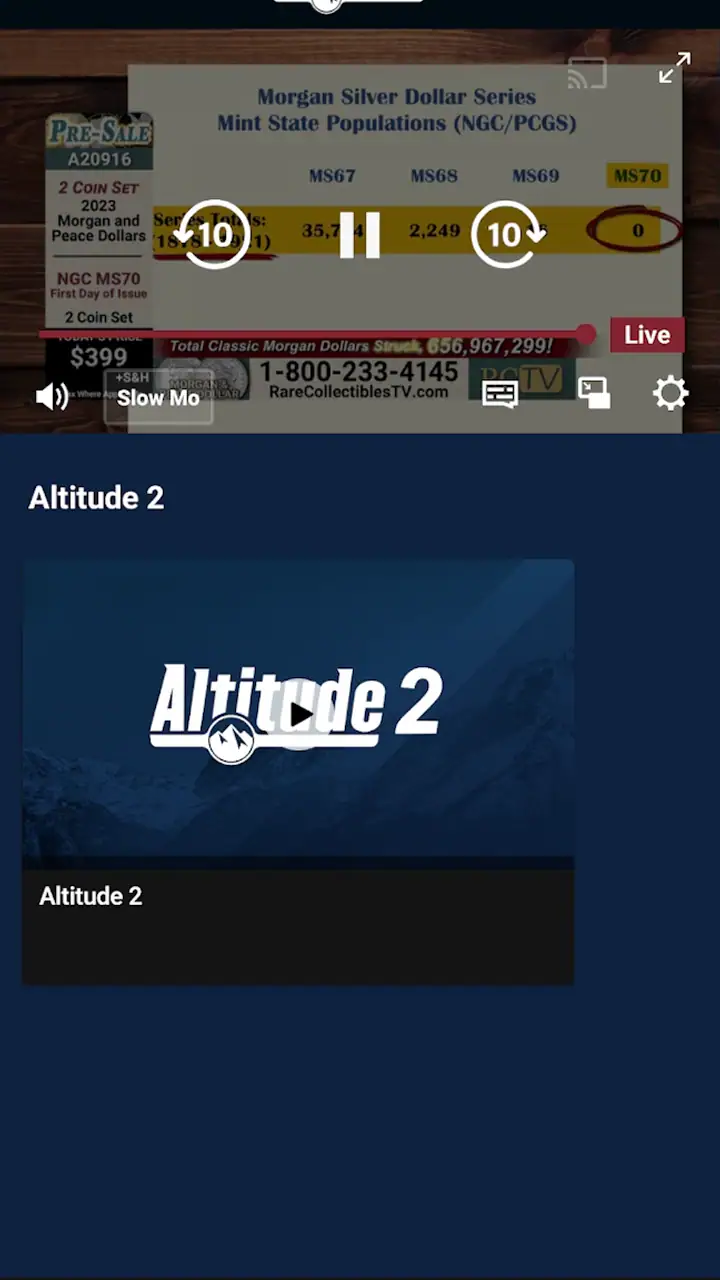
A practical scenario would be a weeknight when I want to follow an Altitude Sports broadcast while preparing dinner. I would install the app earlier in the day, open it, locate the relevant viewing path, and confirm that the option suits my plan. If everything is ready, the app becomes a convenient handoff from “I want to watch this” to “the broadcast is on.” If I leave those checks until the opening whistle, the same workflow can become stressful.
Moving through the viewing workflow
The next step is to treat the app as a route rather than a destination. I begin with the content I want, inspect the available path to it, and then decide whether to continue. That sounds simple, but it is a useful way to judge a focused streaming product. The app earns its place when it reduces the distance between the Altitude Sports brand and the program I want to see.
I would also keep my expectations modest about discovery. A broad service can fill empty time with recommendations from many categories. A network-specific app is more likely to be valuable because it concentrates attention on its own sports coverage. That is helpful when I already know what I want, but less helpful when I want the app to surprise me with unrelated viewing choices.
One non-obvious advantage of this narrow workflow is decision speed. When I am following one sports outlet, I do not necessarily want a wall of unrelated thumbnails competing for attention. A focused app can make the decision feel more intentional: identify the Altitude Sports content, check the route to viewing, and start. The trade-off is that the same focus can feel sparse if there is no current program that interests me.
Another useful habit is separating the app from the screen where I intend to watch. I would first confirm that the content and access route make sense on the device in my hand, then consider whether I want to continue there or move the viewing session to another setup. That separation prevents me from treating installation as proof that the entire living-room workflow is already solved.
Where the handoffs become important
The most important handoff is between the app and the viewer’s decision to pay. Because the download is free but individual in-app purchases can be expensive, I would slow down at that point. I want to know exactly what I am selecting, whether it matches my intended viewing period, and whether the price makes sense for how often I expect to use the service.
This is where Altitude+ differs from a simple free sports news app. A news app can often satisfy a quick need with headlines, scores, or short updates. A streaming service asks me to think about access, timing, and value. If I only need a score during a commute, paying for a streaming option would be excessive. If I regularly follow the network’s coverage, the dedicated route may be easier to justify.
The next handoff is from the mobile app to the rest of my viewing routine. I might begin by checking the schedule or available program on my phone, then watch from a more comfortable screen if my setup supports that workflow. I would not assume that every transition is automatic. Instead, I would plan the session around what the app clearly makes available and keep the phone as a backup for checking the service if the main viewing arrangement becomes inconvenient.
There is also a social handoff. If I am watching with friends, I would verify access before inviting them over. A service that works well for my personal account may still create friction when several people expect to join immediately. The practical lesson is simple: test the route before the event, not during it. This is especially relevant when the purchase range reaches from a moderate one-time amount to a much larger one.
The developer, Altitude Sports & Entertainment, LLC, gives the app a clear connection to the network it represents. That can be reassuring for viewers who specifically want Altitude Sports rather than an unofficial collection of links or scattered coverage. At the same time, a direct connection to one network means the app’s usefulness is tied to that network’s priorities and available programming. It is a strength for the right audience, not a universal advantage.
What the finished result feels like
When the workflow succeeds, the result is a more direct way to reach Altitude Sports content. I do not have to begin with a large catalog and search across unrelated channels. I begin with the network I care about, use the app as the entry point, and get to the viewing decision with less distraction. That is the clearest reason I would recommend trying it.
The result is particularly sensible for a viewer who follows Altitude Sports often enough to recognize its programming as a destination. The app can serve as a dedicated bookmark in daily life: open it when there is a broadcast to follow, check the available route, and continue if the terms work for me. It is not trying to be my entire sports identity, and I would not judge it by that standard.
For occasional viewers, the outcome is more mixed. The free download lowers the barrier to testing the app, but the purchase range means the final value depends on the specific viewing need. Someone who watches one event and rarely returns may prefer a television package, a broader service already included in an existing subscription, or simply a lower-cost way to follow scores. Someone who repeatedly wants Altitude Sports coverage may find the dedicated app more logical than piecing together alternatives.
The rating of three and a half suggests that the experience is not universally smooth for everyone. I would read that as a reason to approach it practically rather than dismiss it. A focused sports app can be exactly right for one viewer and a poor fit for another, depending on the desired content, the timing of the event, and the cost of the available purchase. The rating gives useful context, but my own decision would be based more on whether the workflow reaches the broadcasts I actually want.
One strength I would not overlook is clarity of purpose. Many sports products try to cover everything and end up making the viewer work to find a particular network or competition. Altitude+ starts from a recognizable identity. If that identity matches my interests, the app’s limited scope becomes a form of organization rather than a weakness.
One limitation is the opposite side of that same design. If my viewing habits change from one sport or network to another, I may need several services and several payment decisions. In that situation, a broader sports platform could be more convenient, even if its interface is busier. The better option depends on whether I value Altitude Sports specialization more than having one wider subscription.
Where my workflow would break
The first breaking point is content mismatch. If I install the app expecting it to cover every team, league, or event I follow, disappointment is likely. Its role is connected to Altitude Sports, so I would use it for that ecosystem rather than as a universal sports pass. A broader alternative is better when my priority is variety across many networks.
The second breaking point is price sensitivity. Free installation is useful for trying the service, but the in-app purchase range can make an impulsive decision costly. I would never begin a live viewing session by tapping through a payment screen without checking the amount and the value I expect to receive. If I only watch sports sporadically, a service already included in my household setup may be the smarter choice.
The third is timing. A dedicated streaming app is most valuable when it gets me from intention to viewing without unnecessary delay. If I have not opened it beforehand, checked the relevant route, or prepared my viewing setup, the pressure of a live event can expose every small point of friction. My practical tip is to run a short pre-event check: launch the app, find the intended program, review the access choice, and confirm where I plan to watch.
The fourth is audience fit. The Everyone rating makes the app broadly approachable from an age-classification standpoint, but that does not mean it suits every household’s sports needs. A family looking for varied entertainment may want a broader catalog, while a committed Altitude Sports viewer may appreciate the focused destination. I would choose based on viewing habits, not simply on the fact that the app is free to install.
Finally, the service may not be the right answer for someone who wants a fully mature, widely established streaming experience. Its release in late 2024 and relatively small install base suggest a newer product with room to evolve. That is not automatically a problem, but it affects my expectations. I would be willing to test it, yet I would keep an alternative available for an important event until I knew the workflow worked reliably for me.
My recommendation after using it as a real viewing tool
I would recommend Altitude+ to a sports fan who specifically wants the Altitude Sports experience in a dedicated app and is prepared to review the purchase option before watching. The service makes sense when the starting point is a known Altitude Sports broadcast, not when the starting point is “show me every kind of sport.” Its best quality is focus.
I would skip it if I mainly need scores, broad sports discovery, or one subscription covering many unrelated networks. In those cases, a sports news app, a television provider, or a wider streaming service may involve fewer handoffs. I would also be cautious if a large one-time purchase would be difficult to justify for occasional viewing.
For me, the sensible approach is to install the free app, test the path to the content I care about, and make the payment decision only after I understand the exact viewing need. That workflow respects both sides of Altitude+: it can be a convenient home for Altitude Sports, but its focused scope and purchase structure mean it is not automatically the best sports app for everyone.
Overall, I see it as a targeted tool rather than a complete sports universe. When my starting condition is “I want Altitude Sports,” it gives me a direct place to begin and a clear route toward watching. When my starting condition is broader, I would choose something else. The right audience is the viewer who values network-specific access enough to make the dedicated workflow worthwhile.
FAQs for Altitude+
What is Altitude+ and what does the app do?
Altitude+ is an app designed to provide altitude and elevation information using your device’s location services and available sensors. After granting the necessary permissions, it can help you check your current elevation and understand changes in altitude while traveling, hiking, cycling, or exploring unfamiliar areas. Its usefulness depends on your phone’s GPS accuracy, sensor support, and the quality of the surrounding signal.
Does Altitude+ require an internet connection to work?
Altitude+ may use GPS and other device sensors to determine your position and elevation, so some basic functions can work without a continuous internet connection. However, internet access may be needed for maps, location data, updates, advertisements, or additional information. Before relying on the app in remote areas, it is a good idea to open it beforehand, allow location access, and confirm which features remain available offline.
How accurate is the altitude information shown by Altitude+?
The altitude displayed by Altitude+ should be treated as an estimate rather than professional surveying data. Accuracy can vary because GPS elevation is generally less precise than horizontal location, while barometric readings can be affected by weather, air pressure, and device hardware. Buildings, mountains, trees, and weak satellite reception may also influence results, so users should allow time for calibration and avoid using the app for safety-critical measurements.
What permissions does Altitude+ request, and are they necessary?
Altitude+ commonly requires location permission to calculate or display your position and elevation. Depending on the features available in the version you install, it may also request access related to motion, sensors, notifications, or internet connectivity. Review the permission explanations shown by Android or iOS before accepting them. You can usually manage permissions later in your device settings, although restricting location or sensor access may reduce the app’s accuracy.
Is Altitude+ free to download, and does it include in-app purchases or advertisements?
The availability, pricing, advertisements, and optional purchases for Altitude+ can vary according to the platform, region, and current store version. Check the Google Play Store or Apple App Store listing before downloading to see whether the app is free, supported by ads, or offers paid features such as removing advertisements or unlocking extra tools. Also review the subscription terms carefully if recurring payments are offered.
Pros
- Displays altitude clearly with an easy-to-read interface.
- Supports multiple measurement units for different preferences.
- Uses GPS to provide location-based elevation readings.
- Useful for hiking
- travel
- photography
- and outdoor activities.
- Quick access to current elevation without complicated setup.
Cons
- Accuracy can vary with weak GPS signals or poor weather conditions.
- May consume extra battery while continuously tracking location.
- Some features may require a premium upgrade or in-app purchase.
- Altitude readings can take time to stabilize after opening the app.
- Limited usefulness indoors or in areas with obstructed satellite signals.


